Quick Answer
Generator redundancy reduces single points of failure and helps critical facilities maintain power during outages and maintenance.
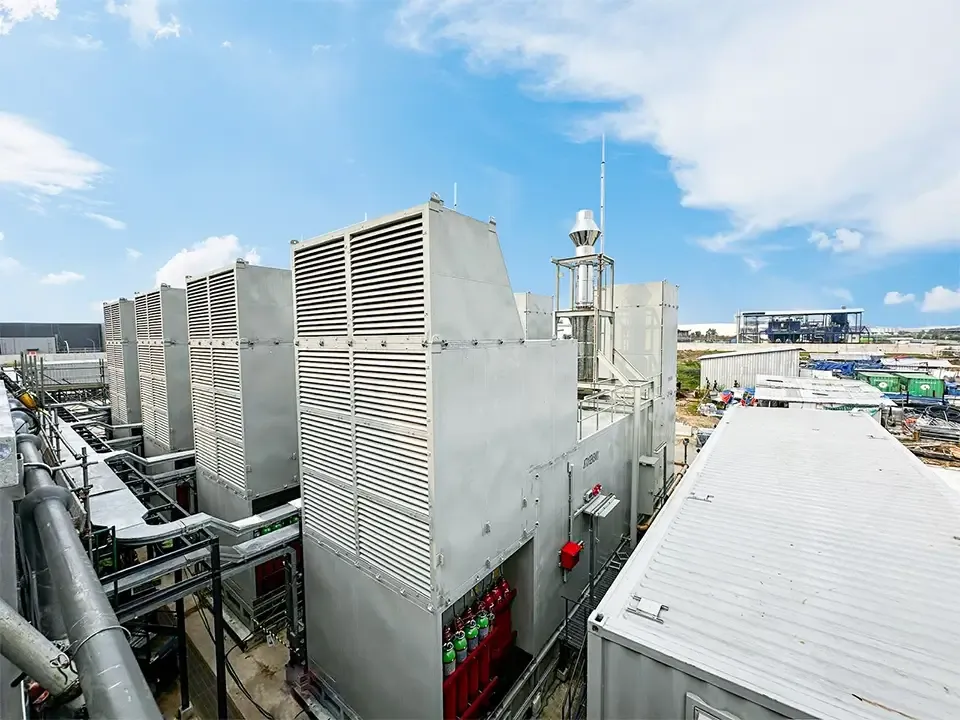
A backup generator can protect a facility during a utility outage, but one generator does not always provide sufficient resilience. If that unit fails to start, cannot accept load, or requires maintenance, the facility may lose its only alternative power source.
Generator redundancy addresses this risk by adding capacity, equipment, or independent power paths. However, an effective redundant design involves more than placing two generators beside each other. The system must also consider controls, switchgear, fuel, starting batteries, cooling, ventilation, and electrical distribution.
Why a Single Backup Generator Can Still Leave a Facility Exposed
A well-maintained generator can provide dependable service. Nevertheless, every mechanical and electrical system has potential failure modes. A weak starting battery, control fault, cooling problem, fuel restriction, or protection trip can prevent a generator from supplying power when required.
Planned maintenance creates another concern. Technicians may need to shut down a generator to inspect internal components, replace parts, or perform repairs. If the facility relies on one unit, maintenance can temporarily remove its backup capability.
The consequences depend on the facility. A short loss of power may cause inconvenience in a conventional office. In a data center, hospital, process plant, or communication facility, the same interruption can affect critical services, data integrity, equipment, or safety.
Redundancy gives the system another way to support the load when one component becomes unavailable.
Understanding N, N+1, and 2N Configurations
Engineers commonly describe redundancy by comparing available capacity with the capacity required by the critical load.
N Configuration
An N configuration provides exactly the capacity needed to support the designated load. For example, if a facility requires two generator units to carry its critical load, those two units represent N.
This arrangement can meet the power requirement under normal backup operation. However, the system may lose capacity if one unit fails or undergoes maintenance. Therefore, N offers capacity but no additional generator redundancy.
N+1 Configuration
An N+1 arrangement adds one independent unit beyond the number required to carry the load. If two generators can support the critical load, the system would include a third comparable unit.
The additional generator allows one unit to remain unavailable while the others continue supporting the required capacity. Consequently, N+1 can improve both fault tolerance and maintainability.
However, the extra unit only provides meaningful resilience if the supporting system can isolate a failed generator without interrupting the remaining units.
2N Configuration
A 2N arrangement provides two complete sets of the capacity required by the load. Each set can support the designated demand independently.
This configuration offers a higher level of separation, particularly when each power path has independent controls, switchgear, and distribution. On the other hand, 2N requires more space, equipment, fuel infrastructure, and capital than less redundant arrangements.
Not every facility needs 2N. The selection should reflect the acceptable risk, financial impact of downtime, operational requirements, and maintenance strategy.
Generator Redundancy Must Extend beyond the Engine
Multiple generators do not automatically create a resilient system. If they depend on one control panel, a single fuel pump, common switchgear, or one distribution path, the failure of that shared component may make every generator unavailable.
Therefore, engineers need to examine the complete path from fuel storage to the final critical load.
Starting and Control Systems
Each generator typically relies on batteries, chargers, starting circuits, sensors, and a controller. A redundant design should limit the possibility that one control or auxiliary failure affects multiple units.
Facilities should also consider the supervisory system that starts, synchronizes, and dispatches the generators. If a single master controller manages the complete plant, the design needs an appropriate response for controller failure.
Manual operating provisions may support recovery, but they must remain practical, documented, and safe for the operating team.
Switchgear and Transfer Equipment
Switchgear connects generators to the electrical distribution system. It may also synchronize multiple units, divide the load, and isolate equipment during a fault.
A redundant generator arrangement can still fail if all power must pass through one nonredundant switchboard or transfer device. As a result, engineers should evaluate bus configuration, breaker arrangement, protection, isolation capability, and alternative power paths.
The system should allow technicians to remove faulty equipment without unnecessarily interrupting healthy sections.
Fuel Supply
Generators cannot provide sustained backup power without reliable fuel. A facility may have several generators but remain dependent on one transfer pump, fuel line, day tank, or delivery route.
Fuel planning should consider storage capacity, quality management, filtration, transfer equipment, leak containment, and replenishment during an extended outage. Where the operating risk justifies it, the system may need redundant pumps or alternative transfer arrangements.
Furthermore, teams should test the fuel system under realistic operating conditions. A full tank does not guarantee that fuel can reach every engine at the required rate.
Cooling and Ventilation
Each operating generator releases heat. If multiple units run together, the room and ventilation system must handle their combined thermal output.
Shared fans, louvers, or control circuits can become common points of failure. Restricted airflow may force generators to reduce output or shut down because of high temperature.
Therefore, redundancy planning should confirm that cooling and ventilation remain available during a utility outage and under the expected generator operating scenario.
Match the Redundancy Level to Business Risk
More redundancy generally increases resilience, but it also increases cost and complexity. Companies should select an architecture based on the consequences of interruption rather than applying the highest configuration to every facility.
The evaluation can consider:
- the financial impact of downtime;
- safety and regulatory obligations;
- maximum acceptable interruption time;
- required recovery time;
- availability of UPS or other energy storage;
- expected outage duration;
- maintenance requirements;
- and future load growth.
A facility that can pause operations safely may accept an N configuration with a strong maintenance plan. Conversely, a site that cannot tolerate the loss of one generator may require N+1 or a more independent architecture.
For facilities with critical digital infrastructure, the selection of a data center generator should form part of this wider reliability assessment. Generator capacity alone cannot determine the resilience of the complete power system.
Consider the Transition before Generators Take the Load
Generators need time to detect a utility failure, start, reach operating conditions, and accept load. During that interval, UPS systems or other stored-energy solutions may support equipment that cannot tolerate an interruption.
The required transition time affects the relationship between the generator plant and the UPS. If generators take longer than expected to stabilize, the UPS must sustain the critical load for a longer period.
Engineers should also consider what happens after the generator bus becomes available. Applying every load simultaneously can produce a large step that affects voltage and frequency. A staged loading sequence allows the generator system to recover between groups of equipment.
This sequence becomes especially important when the facility contains large motors, cooling equipment, transformers, or UPS systems with significant input demand.
Design for Maintenance without Losing Protection
One of the main benefits of generator redundancy is the ability to maintain equipment while preserving backup capacity. However, the physical and electrical design must support that objective.
Technicians need safe access to isolate a generator, its starting system, fuel connections, controls, and breaker. Meanwhile, the remaining equipment must continue operating without exposure to maintenance activities.
A maintenance plan should explain how the facility will respond if a utility outage occurs while one generator remains unavailable. The plan may require temporary operating restrictions, additional monitoring, or postponement of nonessential work.
Without this preparation, an N+1 installation may temporarily function like an N system without the operations team recognizing the increased risk.
Test Failure Scenarios, Not Only Successful Starts
Routine no-load starting confirms that an engine can run, but it does not verify the resilience of the full system. A meaningful test program should examine how the plant responds to realistic events.
Examples include:
- one generator failing to start;
- one unit tripping while sharing load;
- loss of a battery charger;
- failure of a fuel transfer pump;
- loss of a control or communication signal;
- isolation of a switchgear section;
- and restoration of utility power.
Testing should also confirm load shedding and staged loading logic. If the available capacity decreases, the control system may need to disconnect lower-priority loads so critical equipment can continue operating.
Teams should define the expected response before each test. They can then compare actual performance with the design intent and document any corrective action.
Avoid Common-Mode Failures
Common-mode failures affect multiple redundant components at the same time. They can result from shared equipment, environmental conditions, design errors, maintenance mistakes, or external events.
For example, two generators in the same room may both become unavailable if flooding reaches their controls. Likewise, redundant units can fail if they receive contaminated fuel from one shared tank.
Physical separation, independent routing, fire protection, drainage, access control, and environmental monitoring can reduce these risks. However, the appropriate measures depend on the facility and its threat assessment.
Operational procedures matter as well. A maintenance error can defeat well-designed redundancy if technicians isolate the wrong breaker or leave a control mode incorrectly configured.
Keep Capacity and Documentation Current
Generator redundancy reflects the load and operating assumptions used during design. As the facility expands, the original spare capacity may gradually disappear.
A system designed as N+1 can effectively become N if new equipment consumes the capacity of the additional unit. Therefore, companies should review the load schedule after major expansions and compare measured demand with the design basis.
Teams should also maintain current single-line diagrams, control narratives, protection settings, operating procedures, and test records. Accurate documentation helps operators understand which components remain available during a fault or maintenance activity.
Conclusion
Generator redundancy helps critical facilities continue operating when equipment fails or requires maintenance. However, resilience depends on the complete system, including generators, controls, switchgear, fuel, ventilation, starting systems, and distribution paths.
An effective design begins with a clear understanding of the critical load and the consequences of downtime. It then selects an appropriate N, N+1, or 2N configuration while addressing common points of failure and realistic operating scenarios.
For organizations reviewing their backup power architecture, PT Conductorjasa Suryapersada can help assess generator requirements in relation to facility conditions and operational priorities. A measured approach allows the system to provide meaningful resilience without adding complexity that the facility cannot maintain.
Frequently Asked Questions
What does redundancy mean in a backup power system?
Redundancy means providing additional capacity, equipment, or power paths so the system can continue operating when one component fails or requires maintenance.
What is the difference between N, N+1, and 2N generator configurations?
N provides only the capacity required by the load. N+1 adds one independent unit beyond that requirement, while 2N provides two complete capacity sets. The appropriate configuration depends on risk, operational priorities, and budget.
Does installing multiple generators automatically make a system redundant?
No. Generators may still share switchgear, controls, fuel systems, batteries, ventilation, or distribution paths that create common points of failure. The complete system architecture requires evaluation.
How should companies test generator redundancy?
Testing should include generator starting, load acceptance, synchronization where applicable, transfer operations, alarms, failure scenarios, fuel support, and the ability to isolate equipment for maintenance.