Quick Answer
Learn how to choose an industrial generator by evaluating load profile, power rating, site conditions, controls, testing, and lifecycle support.
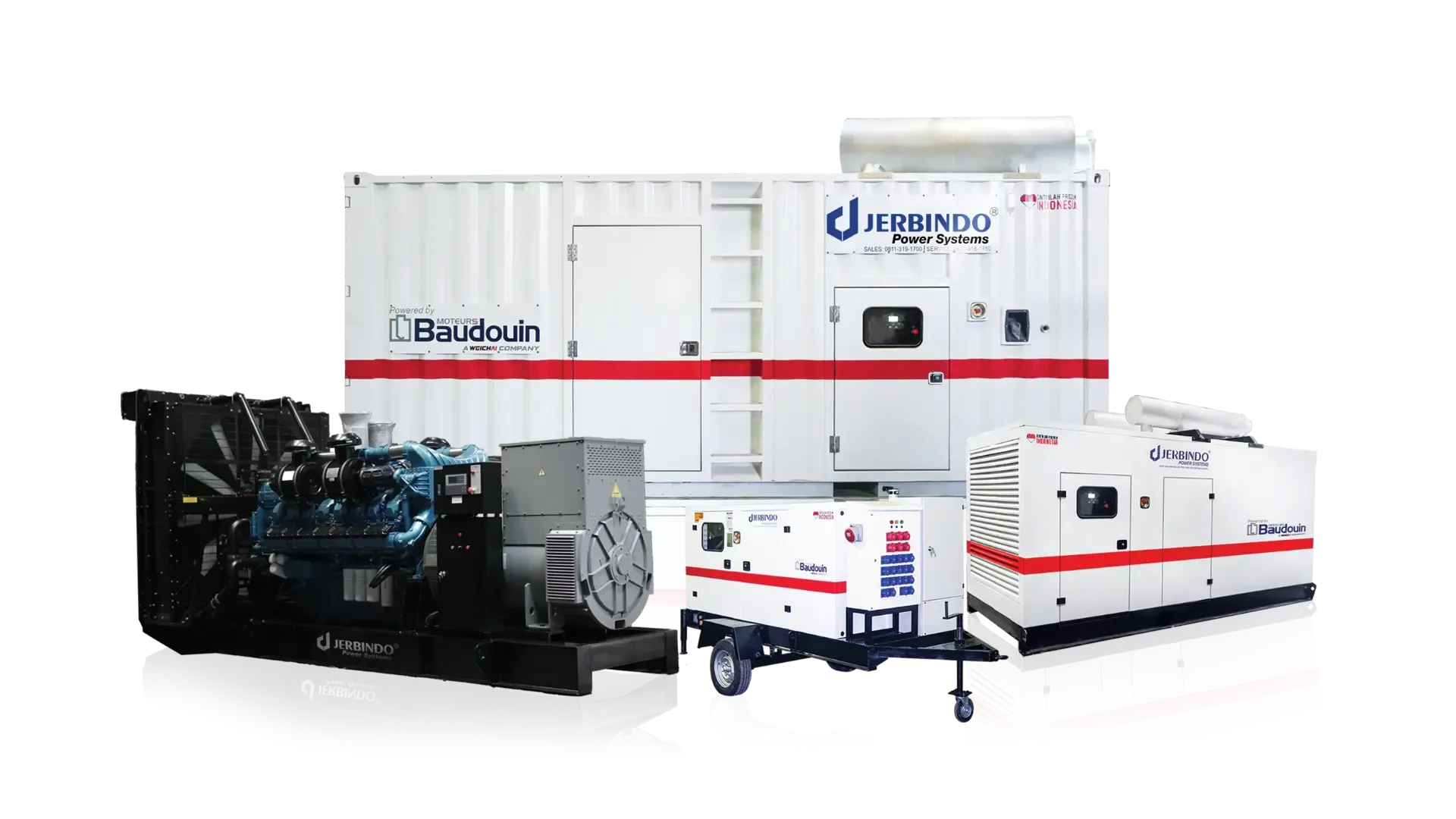
Understanding how to choose an industrial generator helps a company protect production, critical systems, and essential services during a power interruption. The decision involves more than selecting a unit with a large nameplate rating. It requires a clear view of the load profile, operating duty, site conditions, control system, and long-term support requirements.
An undersized generator may struggle with motor starting or sudden load changes. Conversely, an oversized unit can increase capital costs and spend too much time operating at an unsuitable load level.
Therefore, engineering, operations, facility management, safety, and procurement teams should evaluate the generator as one integrated power system. This approach helps the company balance reliability, performance, and lifecycle cost.
How to Choose an Industrial Generator Based on Operational Needs
Start by identifying which equipment must continue running when the normal power supply fails. Not every load requires backup power, so the facility should establish clear priorities.
The company can group its loads into:
- Critical safety and control loads
- Essential production equipment
- Operational support systems
- Nonessential loads that can stop temporarily
This classification prevents the team from sizing the generator by simply adding every equipment nameplate. In addition, the company can use load shedding to disconnect lower-priority equipment when necessary.
Identify Critical Loads
Critical loads may include control systems, safety pumps, process cooling, communication equipment, servers, emergency lighting, and machinery that cannot stop abruptly.
For each load, record:
- Operating power in kW
- Voltage and number of phases
- Power factor
- Running current
- Starting current
- Starting method
- Operating duration
- Expected simultaneous use
Operations teams understand the actual production sequence, while engineering teams understand the electrical behaviour of the equipment. Therefore, both teams should contribute before procurement finalises the specification.
Calculate Capacity from the Load Profile
Generator capacity often appears in kilovolt-amperes, or kVA, while equipment nameplates commonly state active power in kilowatts, or kW.
For an initial estimate, the team can use:
kVA = kW ÷ power factor
However, this calculation does not produce the final generator size on its own. The assessment must also cover simultaneous demand, motor starting, sudden load steps, nonlinear equipment, environmental derating, and operating duty.
When determining how to choose an industrial generator, the team should focus on system behaviour rather than capacity alone. The generator must carry the normal load and respond to realistic changes without creating unacceptable voltage or frequency disturbances.
Do Not Add Every Nameplate Value
The sum of all equipment nameplates may not represent the facility’s actual demand. Some machines operate at different times, while others rarely reach their maximum rating.
Therefore, use available single-line diagrams, measured demand records, motor lists, production schedules, and operating data. If reliable information does not exist, conduct a site survey and collect measurements before finalising the specification.
In addition, separate current requirements from possible future expansion. Include approved projects with clear schedules, but avoid purchasing excessive spare capacity for plans that remain uncertain.
How to Choose an Industrial Generator for Motor-Driven Loads
Large motors can draw substantially more current during startup than during normal operation. As a result, a generator that carries the running load may still struggle when a pump, compressor, conveyor, crusher, or chiller starts.
Review:
- The largest motor
- The motor starting method
- The loads already running during startup
- The number of motors that may start together
- The equipment starting sequence
- The acceptable voltage and frequency dip
Star-delta starters, soft starters, and variable frequency drives can reduce starting demand in suitable applications. Nevertheless, the sizing study must account for the electrical characteristics of those devices.
Furthermore, the facility can sequence its loads. Safety and control systems can start first, followed by production equipment according to priority. This strategy may reduce the required capacity without weakening operational continuity.
Match the Power Rating to the Operating Duty
Generator ratings describe how a unit can operate under defined load and time conditions. Therefore, the company must explain whether the generator will serve as emergency backup, a primary power source, or part of a parallel power system.
Standby Power
A standby generator supplies power during a failure of the normal source. It runs for the outage and stops after the utility supply returns and stabilises.
This rating generally suits facilities that have a reliable normal supply and need emergency backup.
Prime Power
A prime-rated generator supports extended operation with varying loads. Companies may use this arrangement at mining sites, construction projects, remote facilities, and locations with an inadequate grid supply.
Continuous Power
A continuous-rated generator supports a relatively constant load for sustained operation. Typical applications include independent power plants and systems that use the generator for base loading.
When evaluating how to choose an industrial generator, confirm the manufacturer’s limits for average load, annual operating hours, overload capability, and maintenance intervals. A rating label should always match the actual operating profile.
Review Electronic and Nonlinear Loads
Modern facilities operate variable frequency drives, uninterruptible power supplies, rectifiers, welding equipment, automation systems, and switching power supplies.
These loads can introduce harmonics and affect power quality. Consequently, the system may experience voltage distortion, additional alternator heating, or instability in sensitive equipment.
The engineering team should review the alternator capacity, excitation system, voltage regulator, and protection arrangement. In some applications, the generator may require a larger alternator or a different configuration even when the engine has enough kW capacity.
Account for Site and Environmental Conditions
Site conditions directly affect generator performance, safety, and maintainability. For that reason, conduct a survey before approving the final configuration.
The survey should cover:
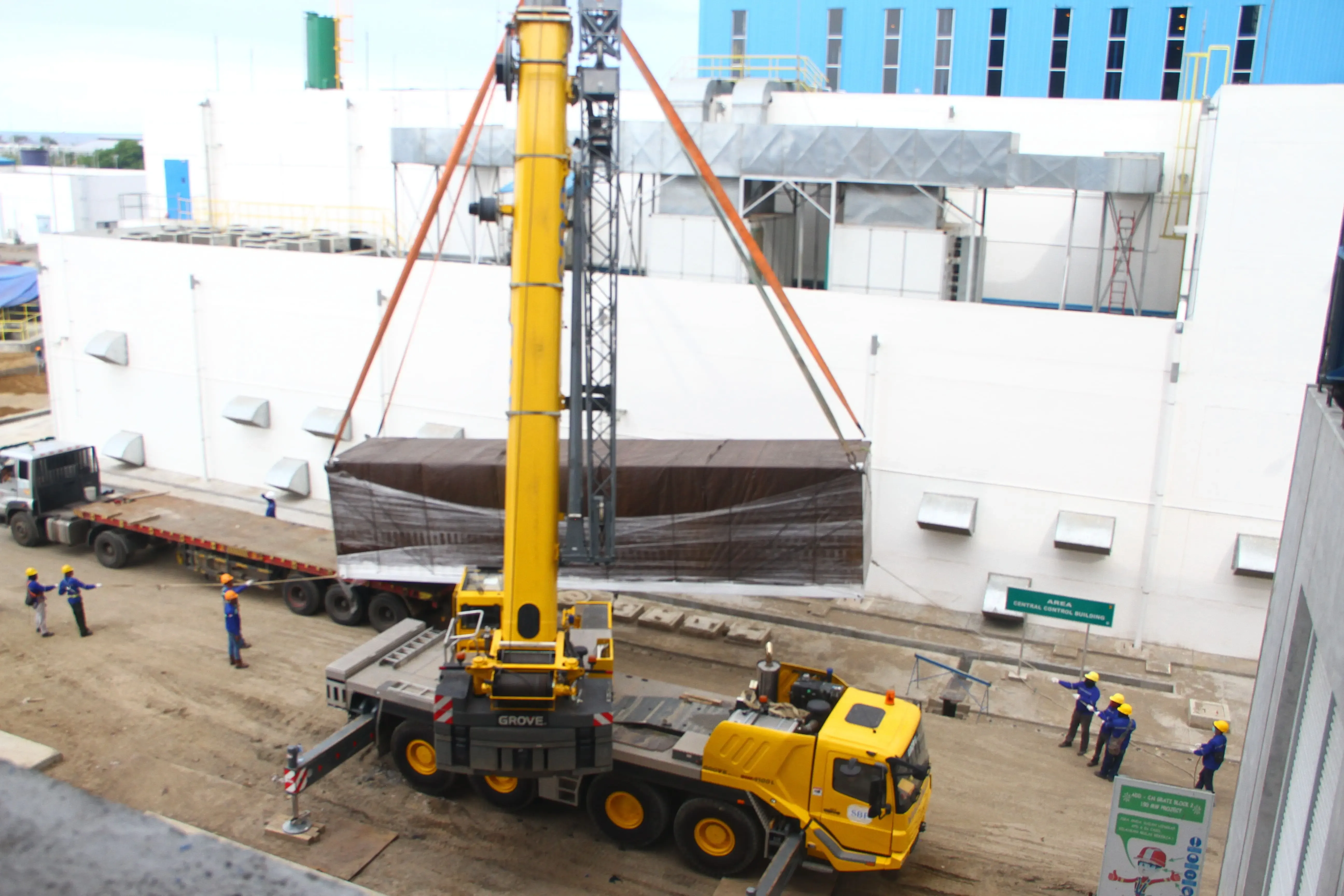
- Delivery and lifting access
- Foundation dimensions and strength
- Ambient temperature
- Site elevation
- Dust and humidity
- Flood and drainage risks
- Ventilation and hot-air discharge
- Exhaust routing
- Fuel storage
- Cable routes
- Noise limits
- Service clearances
High ambient temperature and elevation can reduce engine and alternator output. Therefore, the sizing process must include any applicable derating.
Similarly, poor ventilation can cause hot air to recirculate around the radiator. The installation team must provide a clear path for fresh air and hot-air discharge.
Select an Open or Silent Configuration
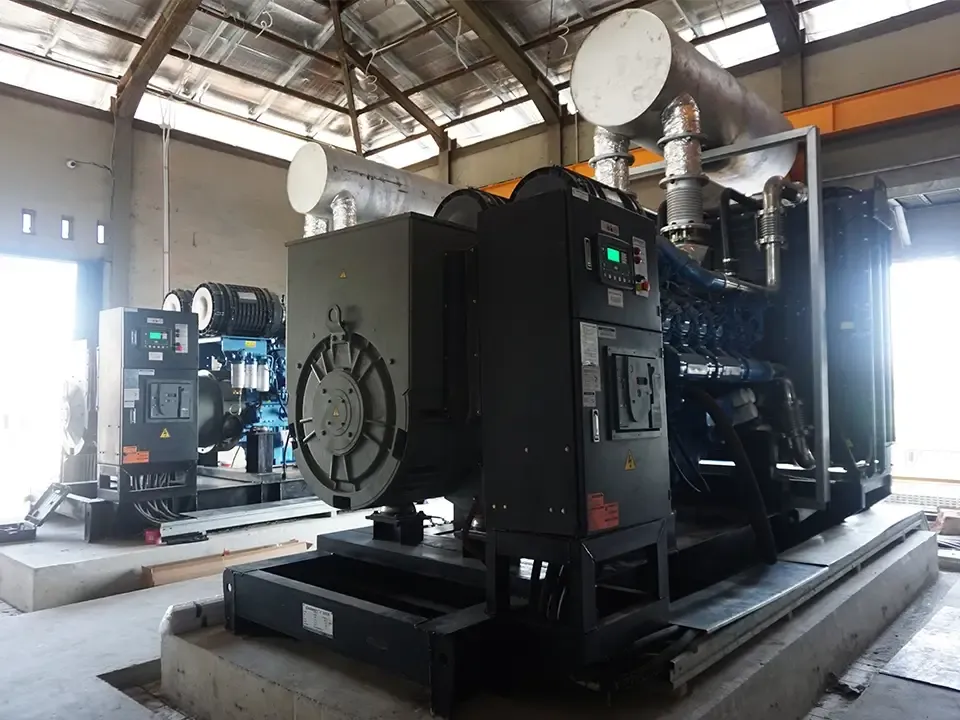
An open generator generally operates inside a dedicated generator room with suitable ventilation, exhaust, weather protection, and acoustic treatment.
Meanwhile, a silent generator uses an enclosure to reduce noise and provide additional physical protection. This configuration can suit outdoor areas or sites near offices, hospitals, hotels, apartments, and other noise-sensitive spaces.
However, an enclosure does not remove the need for cooling airflow, exhaust planning, service access, and drainage. The company should compare both configurations against the actual installation environment.
Plan the Transfer and Control System
A reliable generator system needs controls that respond correctly when the normal power source fails.
An Automatic Mains Failure panel can detect the loss of normal power and initiate generator starting. An Automatic Transfer Switch can then transfer the selected loads to the generator and return them after the normal source stabilises.
In addition, facilities with several generator sets may require synchronisation and load sharing. A multi-unit arrangement can improve redundancy, support phased expansion, and allow maintenance on one unit while other units remain available.
However, the design becomes more complex. The project team must coordinate switchgear, protection, controls, communication, and operating logic as one system.
Confirm Fuel Capacity and Runtime
The company should define how long the generator must run without refuelling. Next, the team should review fuel consumption at several load levels rather than relying only on the full-load figure.
The fuel system assessment should cover:
- Required autonomy
- Main tank and day tank capacity
- Fuel transfer arrangements
- Refuelling access
- Filtration
- Leak prevention
- Fuel monitoring
- Storage and fuel-quality procedures
Stored diesel can collect water and contamination over time. Therefore, routine inspection, sampling, and tank maintenance form part of standby readiness.
Evaluate the Complete Scope of Supply
A generator quotation should describe more than the engine brand and kVA rating. It should clearly identify the alternator, controller, circuit breaker, radiator, base frame, fuel tank, batteries, charger, enclosure, control panels, and accessories.
In addition, request:
- Technical datasheets
- General arrangement drawings
- Electrical diagrams
- Control philosophy
- Fuel-consumption data
- Noise data when relevant
- Testing procedures
- Warranty terms
- Scope exclusions
- Delivery schedule
This information allows procurement and engineering teams to compare offers on the same basis. Otherwise, a lower-priced offer may exclude panels, accessories, installation, testing, or documentation.
Companies can review available industrial generator solutions as an initial reference before finalising the technical configuration.
Compare Lifecycle Cost, Not Only Purchase Price
Purchase price represents only one part of the investment. Fuel consumption, installation, maintenance, spare parts, testing, and downtime can have a greater impact over the operating life of the system.
Compare:
- Generator and accessory cost
- Delivery and lifting
- Civil and electrical work
- Fuel consumption
- Filters, lubricants, and coolant
- Preventive maintenance
- Spare parts
- Testing
- Repair and overhaul
- Potential downtime exposure
A low initial price does not guarantee a lower total cost. Conversely, strong technical support and reliable parts availability can help the company reduce operational risk.
Define Testing and Acceptance Requirements
Before issuing the purchase order, establish the documents, inspections, tests, and acceptance criteria that the supplier must meet.
The test scope may include:
- Visual and dimensional inspection
- Component verification
- Controller function testing
- Simulation of a normal-source failure
- ATS and AMF testing
- Protection testing
- Load bank testing
- Voltage and frequency response checks
- Synchronisation testing
- Operator training
In addition, define who will witness each test and how the team will record the results. Clear acceptance criteria reduce disagreements when the generator reaches the site.
Include Installation and Commissioning in the Plan
A suitable generator can still perform poorly when the installation restricts airflow, creates excessive exhaust backpressure, uses inadequate cables, or provides an unsuitable foundation.
Therefore, installation planning should cover:
- Generator positioning
- Foundation and vibration isolation
- Power and control cables
- Grounding
- Fuel piping
- Exhaust routing
- Ventilation
- ATS and AMF integration
- Protection settings
- System testing
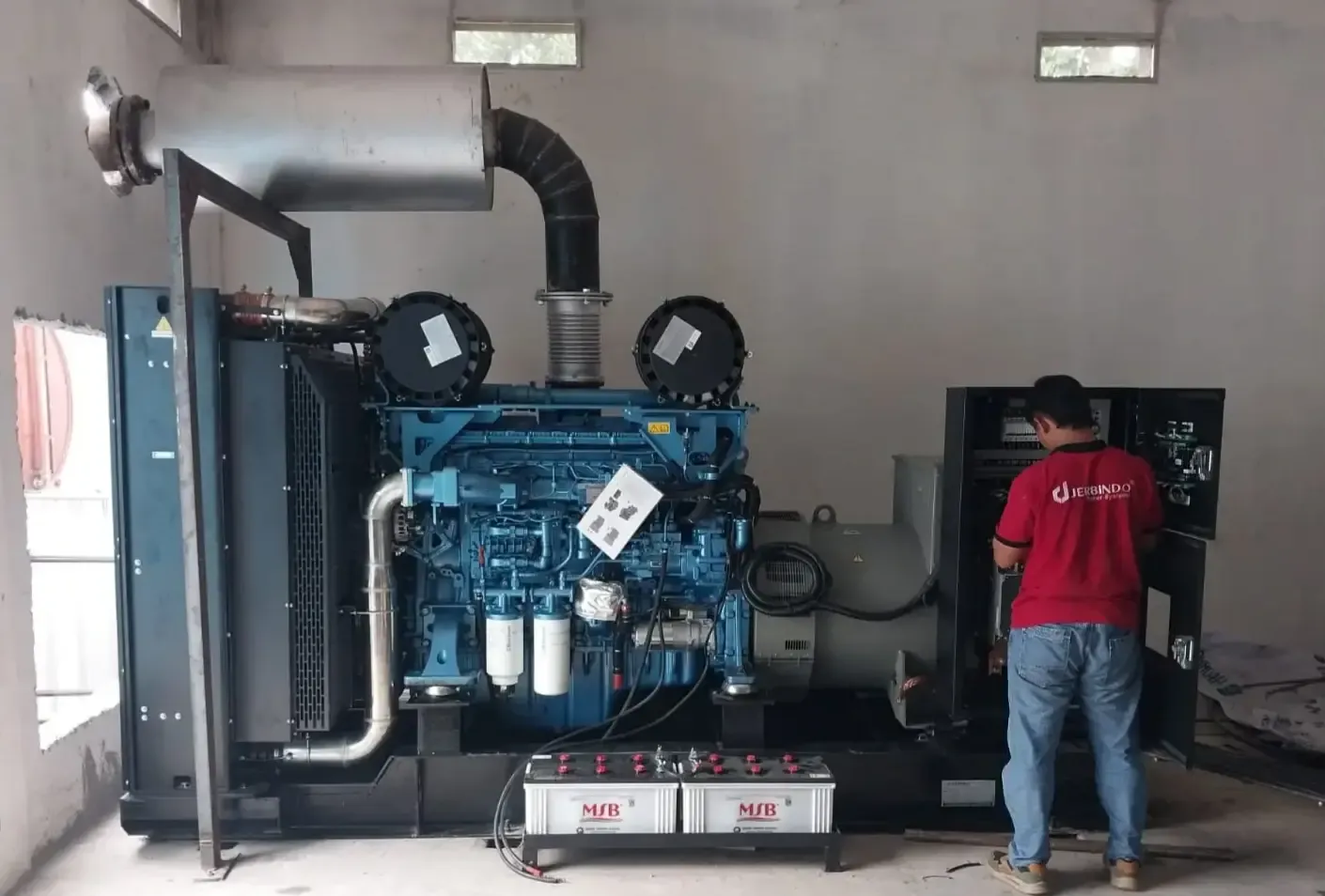
Commissioning should confirm that the complete system works under realistic operating conditions. Furthermore, the handover package should include drawings, manuals, settings, test reports, warranty documents, and operator training.
Consider Maintenance and After-Sales Support
Lifecycle support plays an important role in how to choose an industrial generator because standby readiness continues long after commissioning.
Review the supplier’s ability to provide:
- Preventive maintenance
- Routine inspections
- Troubleshooting
- Engine and alternator repair
- Genuine or compatible spare parts
- Load bank testing
- Overhaul support
- Field technicians
- Emergency response
- Operator guidance
A generator with few running hours still requires routine attention. Batteries, stored fuel, lubricants, coolant, filters, heaters, controllers, and electrical connections can deteriorate while the unit remains idle.
Avoid Common Selection Mistakes
Companies often select a generator by copying the capacity used at another facility. However, two sites can have different motor loads, operating sequences, environmental conditions, and continuity requirements.
Other common mistakes include:
- Sizing only from total nameplate capacity
- Ignoring motor starting demand
- Applying an arbitrary capacity margin
- Selecting the wrong power rating
- Overlooking nonlinear loads
- Skipping the site survey
- Restricting ventilation
- Comparing quotations with different scopes
- Leaving testing requirements undefined
- Ignoring maintenance and parts support
Therefore, document the load assumptions, selected rating, design margin, site conditions, supplier deviations, and acceptance criteria. This record will support future maintenance and expansion decisions.
Industrial Generator Selection Checklist
Before approving the purchase, confirm that:
- The critical-load list is complete
- Running and starting loads have been reviewed
- The operating rating matches the intended duty
- Electronic and nonlinear loads have been assessed
- Ambient conditions and derating have been considered
- Open or silent configuration suits the site
- Ventilation and exhaust routes are feasible
- Fuel autonomy meets the operating requirement
- ATS, AMF, protection, or synchronisation needs are defined
- Installation responsibilities are clear
- Testing and acceptance criteria are documented
- Warranty terms are clear
- Maintenance and spare-parts support are available
- Realistic expansion requirements have been considered
The checklist does not replace an engineering study. Nevertheless, it helps the project team confirm that the main technical and commercial requirements have been addressed.
How to Choose an Industrial Generator for Long-Term Reliability
An industrial generator should support the facility’s actual loads, respond to realistic operating conditions, and remain maintainable throughout its service life. Therefore, selection should combine electrical analysis, site planning, control design, installation, testing, and lifecycle support.
PT Conductorjasa Suryapersada has supported generator projects since 1977. Through JERBINDO and VOLTRAGEN, the company provides generator solutions from 9 to 4125 kVA for industrial and commercial applications.
Conductorjasa can assist with consultation, load assessment, system planning, installation, ATS and AMF panels, synchronisation, commissioning, maintenance, repairs, and spare parts.
Companies planning a generator project can consult PT Conductorjasa Suryapersada to review their load profile, site conditions, operating duty, and system configuration before finalising the investment.
Frequently Asked Questions
How do you determine the right generator size for an industrial facility?
Determine the required capacity from the operating load, simultaneous demand, motor starting current, power factor, load steps, nonlinear loads, site conditions, and realistic expansion plans.
What is the difference between standby and prime generator ratings?
A standby-rated generator supplies emergency power during a utility outage, while a prime-rated generator supports longer operating periods with varying loads. Always follow the operating limits stated by the manufacturer.
Why does motor starting current matter when sizing a generator?
Electric motors can draw significantly more current during startup than during normal operation. If the generator cannot support that demand, voltage and frequency may fall and disrupt other connected equipment.
Does an industrial generator need an ATS and AMF panel?
An ATS and AMF arrangement supports automatic generator starting and load transfer during a utility failure. The required configuration depends on the facility's electrical design and load priorities.
Why should lifecycle support affect generator selection?
Installation, commissioning, preventive maintenance, troubleshooting, spare parts, and technical response all influence long-term reliability and the facility's ability to control downtime.