Quick Answer
Generator maintenance inspection covers the engine, battery, fuel, cooling, alternator, controls, transfer system, and operating condition.
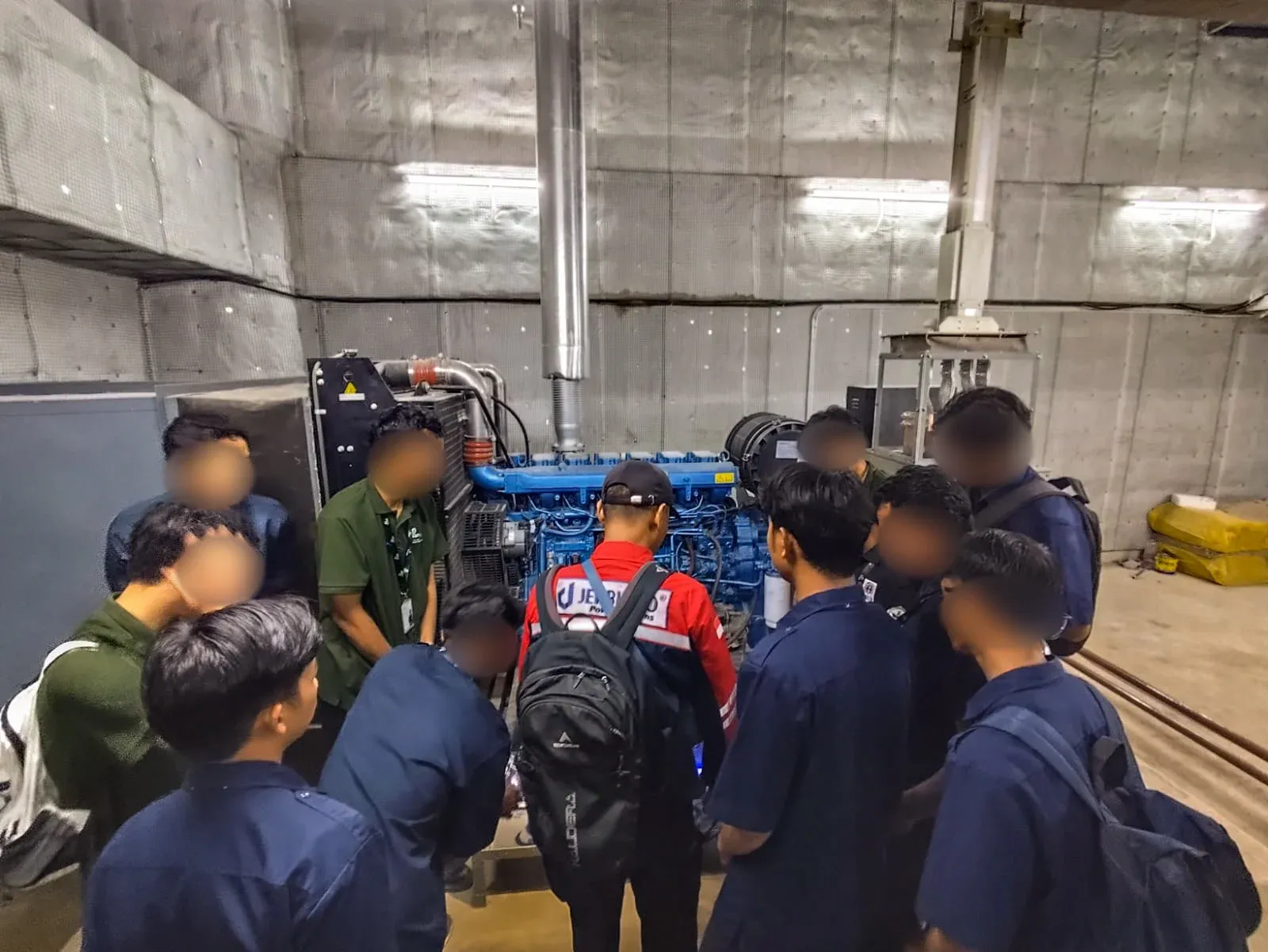
A generator maintenance inspection should examine more than the engine and oil level. A generator set relies on mechanical, electrical, fuel, cooling, control, and transfer components that must work together during a power interruption.
Therefore, a useful inspection follows a structured scope. It looks for early changes, confirms basic functions, and records findings so the maintenance team can act before a minor issue affects generator readiness.
Review Records before Inspecting the Unit
Maintenance should begin with the generator’s operating history. Service reports, alarm records, test results, fuel information, and operator notes can reveal patterns that a visual inspection may not show.
For example, longer starting times may point toward a battery or starter issue. Rising coolant temperature may require an evaluation of airflow, the radiator, or the cooling circuit. Repeated alarms can also indicate an unresolved condition rather than an isolated event.
The technician should review:
- Operating hours
- Previous maintenance dates
- Alarm and shutdown history
- Recent starting performance
- Load-test results
- Fluid and filter replacement records
- Battery-test records
- Fuel inspections
- Previous recommendations
- Changes to the facility or connected load
This review helps the technician focus on relevant areas without ignoring the standard inspection scope.
Establish Safe Working Conditions
Generators contain hot surfaces, moving parts, stored electrical energy, fuel, batteries, and high-current connections. Therefore, the inspection team must follow the facility’s safety procedures before opening panels or touching components.
The team should confirm the generator’s operating mode and understand whether the unit can start automatically. An automatic start during maintenance can expose personnel to rotating equipment and energized circuits.
Qualified personnel should isolate equipment when the work requires it. They should also use suitable personal protective equipment and approved instruments.
A visual check does not authorize an operator to remove guards, open energized panels, or change controller settings. The maintenance scope should clearly separate operator checks from technician work.
Inspect the Engine for Leaks and Physical Changes
The engine converts fuel into mechanical energy. Although internal wear requires specialist evaluation, external signs can provide useful early warnings.
Technicians should look for oil, fuel, and coolant leaks around gaskets, hoses, filters, pumps, and connections. Fresh staining, wet surfaces, or residue can indicate a developing problem.
In addition, the team should examine mounting points, fasteners, guards, and visible engine components. Unusual movement or contact marks may point toward vibration or alignment issues.
Noise and vibration during operation also provide valuable information. A change from the generator’s normal sound does not always confirm a fault, but it deserves documentation and further evaluation.
Check Engine Oil Condition
The team should verify the oil level according to the unit’s procedure. Too little oil can reduce lubrication, while an abnormal increase may indicate contamination or another mechanical issue.
Oil appearance can also provide context. However, color alone cannot determine whether the oil remains suitable. Operating hours, time, laboratory analysis, and manufacturer guidance provide a stronger basis.
Technicians should also inspect the filter, drain points, filler cap, and surrounding areas for leaks or damage. They should record every addition or replacement to maintain an accurate service history.
Examine Belts, Hoses, and Connections
Belts support components such as the fan, coolant pump, or charging system, depending on the engine design. Cracks, glazing, fraying, contamination, and unsuitable tension can reduce their reliability.
Hoses carry coolant, fuel, or air through the system. Heat, vibration, pressure, and age can cause hardening, swelling, cracking, or leakage.
The technician should inspect clamps and connection points as well. A hose may appear healthy while a loose clamp allows a small leak under pressure.
Replacement decisions should follow component condition and service guidance. Waiting for a belt or hose to fail can cause secondary damage and unexpected downtime.
Inspect the Starting Battery and Charging System
The starting battery must supply enough current to turn the engine at the required speed. A healthy engine cannot start if the battery, cables, charger, or starter circuit cannot provide sufficient power.
The inspection should cover battery condition, terminals, cables, connections, and the charger. Corrosion, loose terminals, heat marks, swelling, leakage, or damaged insulation require attention.
A resting voltage check provides limited information. A battery may show an acceptable voltage without load but drop sharply when the starter operates.
Therefore, technicians should use a test method that suits the battery type and system configuration. They should also inspect multiple batteries individually because one weak unit can affect the complete bank.
Observe the Generator during Starting
Starting behaviour can reveal conditions that static measurements miss. The technician should observe cranking speed, controller stability, alarm messages, and voltage response.
Slow cranking, repeated attempts, clicking sounds, or controller resets can indicate a battery, cable, starter, or charging problem. The team should diagnose the complete starting circuit before replacing parts.
Repeatedly attempting to start the engine can drain the battery and overheat the starter. Therefore, operators should stop and report abnormal starting behaviour instead of continuing without a clear procedure.
Check the Fuel System and Stored Fuel
A generator needs clean fuel and a reliable delivery path. The team should inspect the tank, filters, piping, valves, pumps, sensors, and visible connections.
Water, sediment, or microbial contamination can restrict flow and damage the injection system. Fuel that remains in storage for long periods therefore needs a suitable inspection and management program.
Technicians should also look for leaks, damaged hoses, loose fittings, and unusual pressure conditions. If the facility uses a day tank or transfer pump, the team should test its controls and level signals.
Fuel quantity matters as well. The facility should compare the available fuel with its runtime objective and refueling plan rather than relying only on the tank gauge.
Evaluate the Cooling System
The cooling system removes heat from the engine. If it cannot reject enough heat, the generator may trigger an alarm, reduce output, or shut down.
The inspection should cover coolant level, concentration or condition where applicable, hoses, clamps, the radiator, fan, belt, pump, and visible connections.
Dust, oil, and debris can restrict airflow through the radiator. In addition, poor room ventilation can allow hot discharge air to return to the cooling-air inlet.
Technicians should inspect both the generator and its installation environment. Cleaning the radiator alone will not solve a room-airflow problem.
During operation, the team should monitor coolant temperature and compare it with previous records. A gradual change may provide an early warning even when the unit has not reached an alarm condition.
Inspect the Air Intake and Filtration System
The engine requires sufficient clean air for combustion. A restricted filter can reduce performance, increase smoke, and affect fuel use.
Technicians should inspect the filter indicator where available, as well as the housing, ducting, clamps, and intake path. Dust or damaged seals can allow contamination to enter the engine.
The facility environment influences the inspection interval. Construction activity, production dust, and poor housekeeping can increase the filter’s workload.
However, unnecessary filter replacement can also introduce contamination if technicians handle the housing incorrectly. The team should follow condition indicators and service guidance.
Review the Exhaust System
The exhaust system carries hot gases away from the engine and occupied areas. It may include piping, flexible sections, silencers, insulation, supports, and weather protection.
Technicians should look for soot marks, loose supports, corrosion, damaged insulation, and signs of leakage. They should also check whether vibration has affected joints or flexible connections.
The outlet must remain clear, and exhaust gases must not return through ventilation openings. In addition, hot surfaces require suitable protection from accidental contact.
Changes to the exhaust route can affect backpressure. Therefore, the team should review any modification before implementation rather than treating the pipework as a separate building service.
Inspect the Alternator and Electrical Connections
The alternator converts mechanical energy into electrical power. Dust, moisture, loose connections, restricted airflow, or insulation problems can affect its performance.
Qualified technicians should inspect visible wiring, terminals, cable supports, ventilation paths, and signs of overheating. Discoloration, odour, damaged insulation, or loose hardware require further evaluation.
The team should keep the alternator’s air path clean and unobstructed. However, it should use cleaning methods that do not force contamination deeper into windings or damage electrical insulation.
Electrical testing may include insulation assessment, voltage checks, current balance, and other measurements appropriate to the unit. Competent personnel should select and perform these tests.
Check the Controller, Sensors, and Protection Functions
The controller manages starting, stopping, monitoring, alarms, and shutdown protection. It receives information from sensors and communicates with other parts of the backup-power system.
The inspection should review active alarms, event history, operating mode, parameter displays, wiring, and communication status. Technicians should investigate recurring alarms even if the controller allows the generator to continue operating.
Sensor readings should make sense in relation to actual conditions. An unrealistic temperature, pressure, or level value may indicate a sensor, wiring, calibration, or input problem.
Teams should control access to settings. An undocumented adjustment can alter starting logic, protection thresholds, or transfer behaviour.
Avoid Changing Settings without a Technical Review
Controller values often interact with engine, alternator, switchgear, and facility controls. Therefore, changing one parameter can produce consequences elsewhere in the system.
The technician should record approved changes, the reason for each change, and the person responsible. Clear records make troubleshooting easier and reduce configuration uncertainty.
If the facility uses remote monitoring, the team should also confirm communication, timestamps, alarm delivery, and user access.
Inspect the ATS and Transfer System
A generator that starts correctly still cannot support the facility if the transfer system fails. The Automatic Transfer Switch must detect source conditions, send the start signal, and transfer the load according to the control sequence.
Technicians should inspect indicators, wiring, mechanical condition, control power, and event records. They should also look for loose connections, heat marks, dust, moisture, or signs of repeated operation.
A functional simulation can confirm source detection and transfer logic. However, the team must plan the test carefully because it may interrupt or change the facility’s power source.
Facilities with synchronizing switchgear require a broader inspection. The team needs to review breaker control, synchronization, load sharing, protection, communication, and unit priority.
Examine Cables, Grounding, and Terminal Conditions
Power and control cables connect the generator with the rest of the system. Vibration, heat, moisture, mechanical stress, and loose supports can affect their condition.
The team should inspect accessible cable routes, glands, lugs, terminal covers, supports, and grounding connections. It should also look for discoloration, damaged insulation, corrosion, or movement.
Loose high-current connections can generate heat without immediately causing a shutdown. Suitable inspection methods can help technicians identify abnormal conditions before damage develops.
However, personnel should not open or test energized equipment without appropriate authorization, procedures, and protective equipment.
Review Mounts, Vibration Isolation, and the Foundation
The generator foundation supports the unit and helps maintain alignment. Anti-vibration mounts reduce the transfer of engine movement to the surrounding structure.
Technicians should inspect mounts, fasteners, base frames, flexible connections, and visible foundation conditions. Cracks, movement, uneven compression, or contact between the unit and surrounding structures require evaluation.
Vibration can also affect exhaust joints, fuel lines, cables, and cooling connections. Therefore, the inspection should consider how the generator interacts with its installation.
A change in vibration during operation may justify a more detailed mechanical assessment.
Check Ventilation and the Generator Room
The generator room must provide combustion air and remove heat. Restricted intake openings, blocked louvers, failed fans, or hot-air recirculation can raise operating temperature.
The inspection should include air inlets, discharge paths, dampers, louvers, fans, and the space around the generator. Stored materials should not block airflow or service access.
Housekeeping also affects safety. Oil, fuel, loose tools, packaging, and other materials can introduce fire, trip, or mechanical hazards.
In addition, technicians need enough clearance to inspect and service the unit. A generator may operate correctly while poor access makes routine maintenance unnecessarily difficult.
Run the Generator and Observe Its Response
A static inspection cannot reveal every problem. After completing the appropriate preliminary checks, the team should run the generator according to the approved procedure.
During operation, technicians can observe:
- Starting time and cranking behaviour
- Oil pressure and coolant temperature
- Voltage and frequency stability
- Battery-charging condition
- Noise and vibration
- Exhaust condition
- Fluid leaks
- Controller alarms
- Cooling-air movement
- ATS or switchgear response
The team should compare these observations with previous records. Trends often provide more insight than a single measurement.
Test the Generator with an Appropriate Load
Running without load confirms basic functions, but it does not show how the generator responds to actual power demand.
A planned load test helps technicians evaluate voltage, frequency, temperature, engine response, alternator performance, and alarm functions. It can also reveal issues that remain hidden during no-load operation.
The test method should match the facility and maintenance objective. Some sites can use the actual building load, while others may need a load bank or another controlled arrangement.
The team should define acceptance criteria before testing. Afterwards, it should record the load stages, parameters, alarms, and observations.
Document Findings and Prioritise Actions
An inspection only creates value when the team records and follows up on its findings. The report should distinguish urgent safety issues, reliability concerns, routine maintenance, and observations that require monitoring.
Useful records may include photographs, measurements, controller data, operating hours, replaced components, and recommended actions.
The team should assign responsibility and a target date for each action. Without ownership, minor findings can remain unresolved until they contribute to a larger failure.
A consistent reporting format also helps the facility compare results across multiple service visits.
Build the Inspection around the Actual Generator
No single checklist fits every generator. Engine model, alternator, controller, battery arrangement, fuel system, cooling method, enclosure, switchgear, and site conditions all influence the maintenance scope.
For facilities that operate a Perkins generator, technicians should align the inspection with the specific engine model, generator configuration, service information, and operating history.
PT Conductorjasa Suryapersada supports generator-system evaluation and maintenance planning for business, industrial, and critical facilities. A practical maintenance plan can begin with the existing unit configuration, operating records, site conditions, and the operational consequences of generator downtime.
Frequently Asked Questions
Which generator components require regular inspection?
Regular inspection should cover the engine, fluids, battery, fuel system, cooling system, air intake, exhaust, alternator, controller, protection devices, cables, and transfer system.
Can operators perform generator maintenance checks?
Trained operators can perform approved visual and operational checks. Qualified technicians should handle electrical testing, adjustments, component removal, and repairs.
Why should technicians test a generator under load?
A load test helps technicians evaluate voltage, frequency, temperature, engine response, alarms, and the generator’s ability to support actual power demand.
How often should a generator receive maintenance?
The schedule should follow operating hours, elapsed time, manufacturer guidance, site conditions, fuel quality, and the importance of the generator to facility operations.