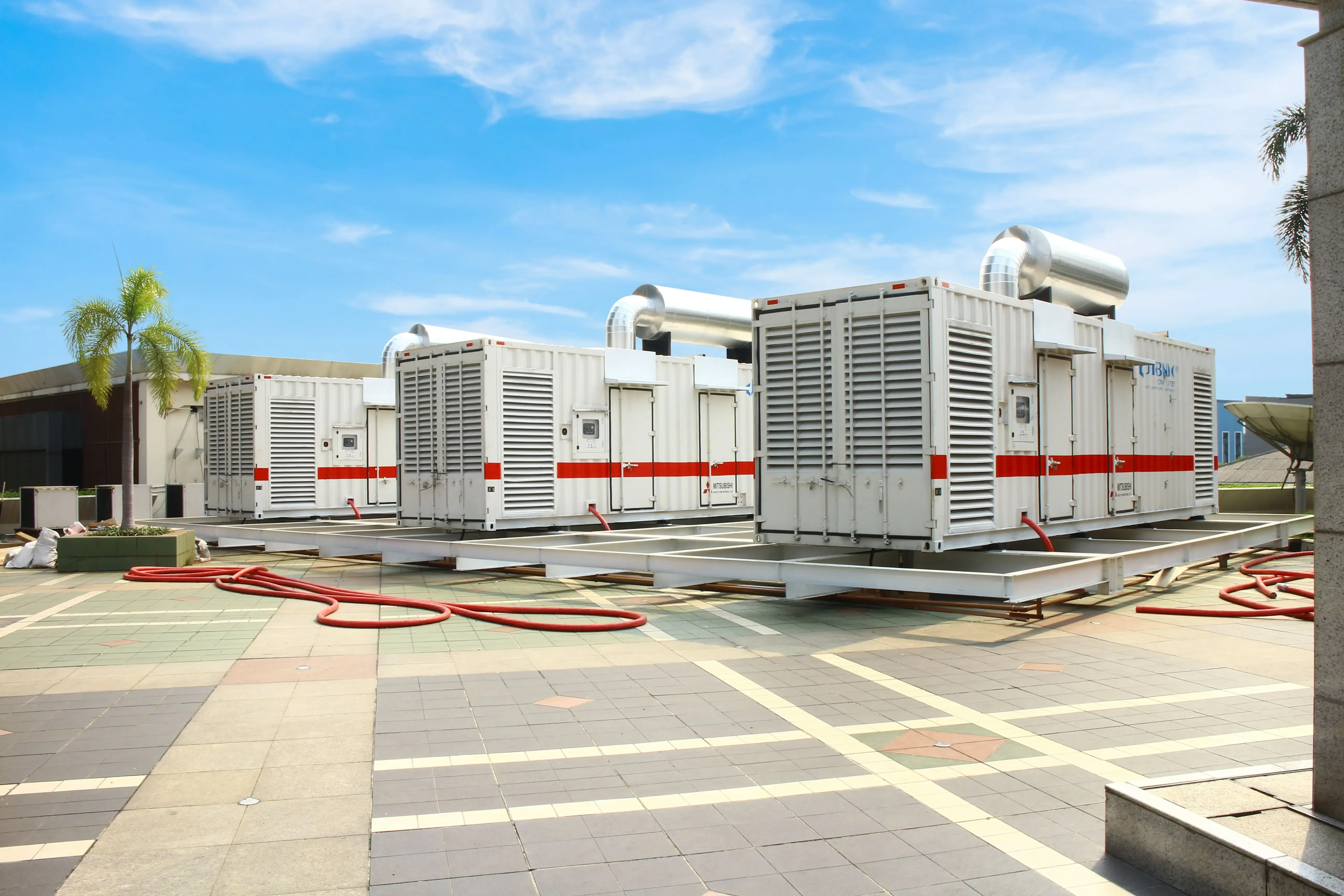
250 kVA Generator
Equal to 200 kW. Cummins, Perkins & Deutz engines, open and silent, with fuel use and dimensions compared.
Getting to Know 250 kVA Generators
A 250 kVA generator sits in the mid class, about 200 kW at a power factor of 0.8. It is often chosen for mid-rise buildings and facilities that need backup for most of their load.
Engine options in the 250 kVA class are varied, so the fuel and dimension comparison below helps pick the best fit.
Suited to
- Multi-storey offices
- Small and mid-size hotels
- Clinics & small hospitals
- Small factories
- Construction projects
- Telecommunications
Prime or Standby?
Main power
250 kVA prime
- The generator is the main power source, for example at a site without grid power
- It runs long hours every day with a varying load
e.g. CJPS C-250 WP1
Grid backup
250 kVA standby
- The generator only runs during grid outages
- Prime slightly below 250 kVA, standby around 250 kVA: usually more economical
e.g. CJPS C-225 WP
250 kVA Generator Options
Every JERBINDO 250 kVA model by engine brand. Select a model for full specifications.
Cummins engine
Fuel at 75% (prime): 39–49 L/hr7 models
| Model | Prime kVA | Standby kVA |
|---|---|---|
| CJPS C-250 WP16LTAA8.9G2250 kVA prime | 250 | 275 |
| CJPS C-250 WP3 (CCEC)MTA11-G2A250 kVA prime | 250 | 275 |
| CJPS C-250 WP3 (DCEC)QSL8.9-G4250 kVA prime | 250 | 275 |
| CJPS C-250 WP4NT855-GA250 kVA prime | 250 | 275 |
| CJPS O-250 WPQSL9-G3250 kVA prime | 250 | 275 |
| CJPS C-225 WP6LTAA8.9G2250 kVA standby | 225 | 247.5 |
| CJPS O-225 WPQSL9-G2250 kVA standby | 225 | 247.5 |
Perkins engine
Fuel at 75% (prime): 41 L/hr2 models
| Model | Prime kVA | Standby kVA |
|---|---|---|
| PJPS-250 WP1206A-E70TTAG3250 kVA prime | 250 | 275 |
| PJPS-225 WP1506A-E88TAG2250 kVA standby | 225 | 247.5 |
Deutz engine
Fuel at 75% (prime): 48.1 L/hr1 models
| Model | Prime kVA | Standby kVA |
|---|---|---|
| DJPS-250 WPTCD 2013 L06 4 V DCR250 kVA prime | 250 | 275 |
Generator Room Requirements
General guidance for the 250 kVA class from engine and generator makers' installation manuals. Final figures follow the installation drawings and datasheet of the chosen unit.
- Minimum room, 1 unit
- 5.9 × 4.1 m
- Open type (L × W × H)
- 2600–2850 × 1050–1100 × 1700–1800 mm
- Silent canopy (L × W × H)
- 4000 × 1400 × 2300–2400 mm
Service clearance
1.5 m per side
- Leave at least about 1.5 m of clear space on every side of the generator for maintenance (Cummins' guide for units from 100 kVA; other sources give 0.9–1.2 m), plus room above it to open panels. With the largest open unit in this class, one generator needs a room of at least about 5.9 × 4.1 m.
Ventilation
Outlet ≈ 1.5× radiator
- Provide an air inlet behind the generator and an outlet in front of the radiator. As a general guide, the outlet is about 1.5× the radiator core area and the inlet 1.5–2× (louvres cut the free area by about 25%). Keep the room no more than about 7–10 °C above outdoor air; above 40 °C the generator needs derating.
- In this class the radiator fan is usually enough, as long as the openings are not blocked.
Foundation
≥ 2× unit weight
- A concrete foundation of at least about 2× the generator's weight, extending 150–300 mm beyond the skid on every side, with vibration isolators between the skid and the foundation. Let the concrete cure for 28 days before loading. Dry weight of the open units in this class: 2–3.1 tonnes.
Day tank
310–390 L / 8 hours
- Fuel use at 75% load: 39–49 L/hr, or about 310–390 L for 8 hours of running. Size the day tank from this; for longer running add a bulk tank with a transfer pump.
- NFPA 37 limits a tank inside the generator room to 2,500 L unless it has its own fire-rated room; local regulations also apply.
Exhaust
Backpressure ≤ datasheet
- A flexible connector at the engine outlet; pipework supported on its own so it does not load the engine, insulated and fitted with a rain cap. Choose the pipe and silencer so backpressure stays within the engine datasheet limit; avoid long runs and many bends. Discharge away from the air inlet.
Configuration
Open · Silent · Mobile
- Open units for a generator room; silent canopy units for outdoor areas or noise-restricted surroundings.
- An ATS/AMF panel is common for grid backup. For a growing load, two units can be synchronized in parallel.
- A silent mobile configuration is available for construction projects and temporary needs.
Generator Projects Around 250 kVA
Projects from our project list with units of around 250 kVA.
Frequently Asked Questions
How much does a 250 kVA generator cost?
The price of a 250 kVA generator depends on the engine brand, the configuration (open type, silent canopy, silent mobile), an ATS/AMF or synchronizing panel, installation and commissioning, the delivery location, and the warranty and after-sales service. Use Request a Quote with your requirements and our sales team will send a quotation.
How many kW is a 250 kVA generator?
At the 0.8 power factor commonly used for generators, 250 kVA equals 200 kW. The exact kW of each model is on its specification page.
How much diesel does a 250 kVA generator use?
At 75% load, the 250 kVA prime generators in our catalogue use about 39–49 L/hr, depending on the engine brand and model. Fuel use at 50% and 100% load is on each model's page.
Should I choose 250 kVA prime or standby?
Choose a 250 kVA prime model if the generator is the main power source or runs long hours with a varying load. If you need 250 kVA only as backup during grid outages, a model with a 250 kVA standby rating (and a slightly lower prime rating) is usually enough and more economical.
Trusted by Various Companies
Decades of experience and a portfolio of projects across many sectors reflect our commitment to quality.
Our clients














































Explore More Generator Solutions
Find the Right Industrial Generator Solution
Discuss your power requirements with our sales and service team to get the right products and services.